
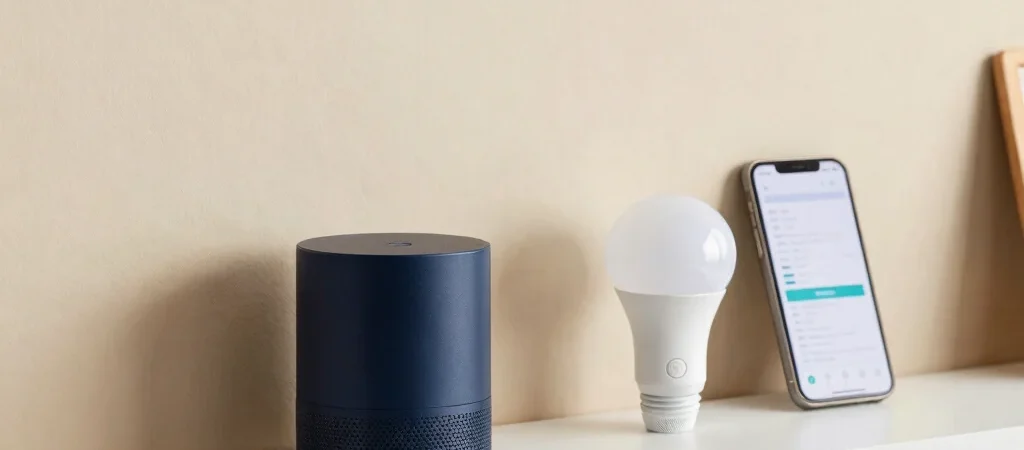
A smart bulb can promise color scenes, schedules, and voice control, yet still be the wrong pick if it won’t connect to your hub or home network. Compatibility is the first buying decision, not a footnote after the feature list. Start with the devices and apps you already use.
Start with your ecosystem
Write down the speakers, hubs, and control apps in your home, then check the product’s supported platforms against that list. “Works with smart home” is too broad to settle the question; look for named systems and any setup requirements. If you share the home with other people, consider whether they can control the device from the apps and phones they already use.
Read the network details
Some connected devices need a particular Wi-Fi band, a hub, or a Bluetooth setup step. Check the product documentation rather than assuming your router or phone will handle everything automatically. In a home with a combined Wi-Fi network name, setup instructions may matter, so look for troubleshooting guidance before you buy.
Treat standards as a clue
You may see Matter listed on compatible smart-home products. It is designed to help devices work across supported ecosystems, but it doesn’t mean every feature works with every controller or setup. Confirm the product’s specific compatibility notes and whether your existing hub or software needs an update.
Compare setup and upkeep
Once compatibility checks out, compare what the device actually does, how it is powered, and whether core features require an app or subscription. A simple setup can be a real advantage; a device with more settings may take longer to configure and maintain. Recommendations on this site may use affiliate links, which can earn a commission, so check the manufacturer’s current specifications and price before deciding.

